


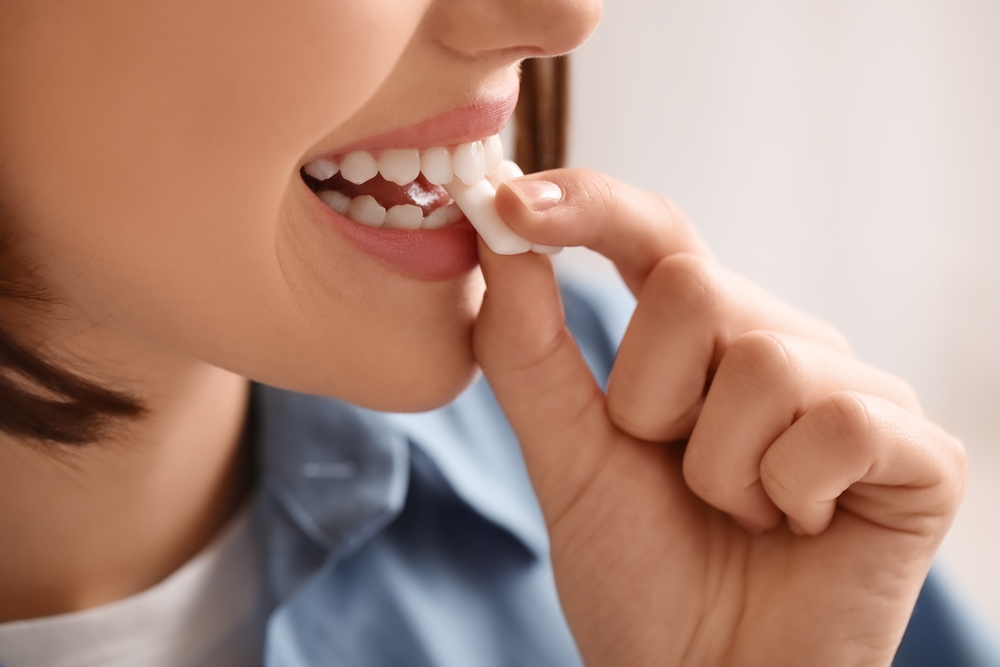
A piece of gum can make your mouth feel fresher after lunch. That fresh feeling can make your teeth seem cleaner too. So, does chewing gum clean your teeth? It can help in a few ways, but it cannot replace brushing, flossing, or a professional cleaning.
Chewing makes your mouth produce more saliva. That extra saliva helps wash away some food. It also lowers the amount of acid sitting on your teeth after you eat. Sugar-free options can also support your teeth without feeding the bacteria that use sugar to make more acid.
At Whiteman Dental Associates, our professional teeth cleaning appointments remove plaque and tartar that gum cannot take away. This guide shows where gum can help and where it falls short. It also explains which type of gum is better for your teeth and when a dental cleaning is still needed. That makes it easier to use gum for the right reasons.
Yes, chewing sugar-free gum can help your mouth after meals, but it does not replace daily cleaning.
Use gum as an extra step after meals. Brushing, cleaning between teeth, and regular professional care still do the main cleaning work.
Chewing tells your mouth to make more saliva. Saliva helps rinse the teeth and lowers some of the acids made by plaque bacteria. It also carries minerals that support the outer layer of the tooth.
Acid levels can rise after you eat, especially after sugary or starchy foods. Extra saliva helps dilute those acids and clear some food from the mouth. This gives enamel a better chance to recover after a meal. A sugar-free option can be useful when you cannot brush right away. It gives your mouth some support until you can get back to your normal routine.
Regular gum can contain sugar that mouth bacteria use for energy. Those bacteria then make acids that can weaken enamel over time. This is why the type of gum you choose makes a difference. Sugar-free products use sweeteners that bacteria do not use in the same way. If you want gum to support your teeth, choose a sugar-free option.
A piece of gum after a meal can help clear some loose food and make your mouth feel fresher. The larger benefit comes from the extra saliva. It helps lower acid levels after eating and can support the early repair of enamel.
Chewing a sugar-free option for about 20 minutes after a meal can help lower cavity risk. The effect comes from saliva flow, not from gum scraping every tooth surface clean. Plaque can still stay along the gumline and between teeth. You still need to brush with fluoride toothpaste twice a day and clean between your teeth daily. Those steps remove plaque in places gum cannot reach.
A sugar-free option is a better choice for your teeth. It does not give mouth bacteria the same easy fuel as regular sugar. Many products use sweeteners such as xylitol, sorbitol, or similar ingredients. These can add sweetness without feeding cavity-causing bacteria in the same way.
Some gums without sugar carry theADA Seal of Acceptance. These products have been checked against ADA standards for the claims shown on the package. For some accepted gums, the claim is that chewing for 20 minutes after eating can help prevent cavities. If you choose to chew gum for your teeth, pick a sugar-free option. You do not need a special gum for every meal.
Does chewing gum clean your teeth well enough to replace brushing? No. Gum can help with saliva and acids, but plaque still needs to be removed from the tooth surface.
A toothbrush reaches the front, back, and chewing surfaces of each tooth. It also lets you clean along the gumline, where plaque often collects. Gum cannot give those areas the same direct cleaning. Brush twice a day with fluoride toothpaste and use gentle pressure. That routine removes plaque before it has more time to harden.
Gum does not clean tight spaces well. Floss, an interdental brush, or another tool made for cleaning between teeth can reach the sides of each tooth. These areas are easy to miss if you rely on brushing alone. If food keeps getting stuck in the same spot, mention it during your visit. We can check for a cavity, a loose filling, or a gap that may need care.
Plaque can harden into tartar if it stays on the teeth. Once that happens, gum and normal brushing cannot remove it. Special dental tools are needed to clear it safely. A professional dental cleaning removes tartar and checks the gumline at the same time. This also gives us a chance to spot areas that need more attention at home.
Gum is most useful as a small extra step between normal brushing and flossing. It can be handy after meals, snacks, or drinks when you cannot get to a toothbrush.
A sugar-free option can freshen your mouth and raise saliva flow after eating. Around 20 minutes is enough for the cavity-prevention benefit linked with ADA-accepted products. You do not need to chew for hours. Gum can also help after acidic food or drinks because saliva helps lower acid levels. Water is another simple choice if you do not want gum.
Sugar-free gum can help some people with dry mouth by making more saliva flow. That extra saliva can make the mouth feel better and help protect the teeth. Dry mouth can raise the risk of cavities because the teeth lose some of saliva’s natural protection. If dry mouth happens often, tell us during your visit. We can look at the cause and talk through ways to help.
Gum does not replace the daily care that helps keep healthy gum tissue around your teeth. Brushing along the gumline and cleaning between teeth are still the main home-care steps. Chewing a sugar-free option may help lower plaque acids, but it cannot remove tartar under the gumline. Bleeding, swelling, or soreness can be signs that your gums need a closer look. A professional cleaning and gum check can help us see what is going on.
During a cleaning, we can measure the spaces around the teeth when needed. This helps us check gum health and decide if deeper care would be useful.
Even a strong home routine can leave plaque behind in hard-to-reach spots. If that plaque turns into tartar, special dental tools are needed to remove it. During a routine cleaning, we remove plaque and tartar, polish the teeth, and clean between them. We can also check your gums and show you any spots that need more attention at home. This gives you a cleaner starting point for your daily routine.
Most people benefit from a dental cleaning about every six months. Some need visits more often based on gum health, dry mouth, or other needs.
Does chewing gum clean your teeth? It can help after meals by raising saliva flow and lowering plaque acids. A sugar-free option is the better choice. Brushing, cleaning between teeth, and regular professional care still do the main work.
At Whiteman Dental Associates, we can remove the plaque and tartar that gum and home care leave behind. If your teeth feel rough or your gums bleed, it may be time for a cleaning. If you are due for one, book a teeth cleaning with us.
Book your next teeth cleaning.
Gum without sugar is fine for many people and may help lower cavity risk after meals. Gum with sugar is less helpful for teeth because mouth bacteria can use that sugar to make acids. If chewing makes your jaw sore, stop and let us know.
About 20 minutes is enough to get the saliva boost linked with cavity prevention. You do not need to keep chewing for hours, and longer chewing does not replace brushing or flossing.
It can help your mouth feel cleaner and lower plaque acids after meals. It cannot remove tartar or take the place of brushing, cleaning between teeth, and regular cleanings.
Some gums are sold for stain control, but they will not bleach your teeth. If tooth color is your main concern, we can talk through whitening options that fit your smile.
Gum is most useful after meals when you cannot brush. You do not need it right after brushing because your normal cleaning routine has already removed more plaque.

![How to Clean Your Teeth [Dentist Guide 2026]](https://www.whitemandental.com/wp-content/uploads/2026/10/How-to-Clean-Your-Teeth-Dentist-Guide-2026.jpg)