


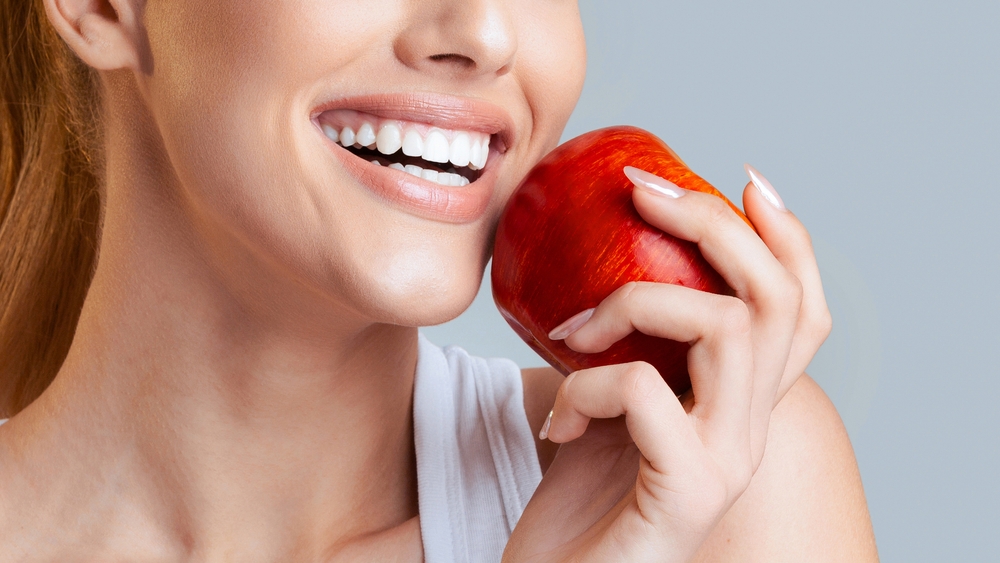
Apples have a reputation as a tooth-friendly snack. They are crisp, juicy, high in fiber, and far better for daily habits than sticky candy or sugary drinks. After eating one, your mouth may feel fresher, and your teeth may feel smoother for a little while. But that clean feeling can make it tempting to think an apple has done the work of a toothbrush.
Do apples actually clean your teeth? Apples can help rinse the mouth, stimulate saliva, and lightly scrub some surface debris while you chew. They do not remove dental plaque as effectively as brushing, flossing, and professional teeth cleanings do. Apples also contain natural sugars and acids, so they are better viewed as a smart snack choice rather than a replacement for fluoride toothpaste or dental care.
At Whiteman Dental Associates in Brookline, thoughtful dental cleanings support healthy teeth and gums by removing plaque and tartar that home care cannot fully remove. Apples can fit into a healthy routine, but good teeth still need daily brushing, flossing, and regular preventive visits.
Apples can make your mouth feel cleaner, but they do not truly clean teeth in the dental sense. Cleaning teeth means removing plaque, reducing buildup, and protecting enamel. Apples may help loosen some food particles, but they cannot clean between teeth or remove sticky plaque from the gumline.
| Claim | Reality |
| Apples clean teeth like a toothbrush | No, brushing with fluoride toothpaste is still needed |
| Apples remove plaque | Not reliably |
| Apples make teeth feel fresh | Yes, chewing can stimulate saliva |
| Apples are better than candy | Often, because they contain fiber and water |
| Apples replace teeth cleanings | No, cleanings remove tartar and check gum health |
An apple can be a helpful snack, but it should sit beside dental care, not take its place.
Why do apples make your teeth feel clean? The texture and water content play a big role. A crisp apple takes more chewing than many soft snacks. That chewing increases saliva, and saliva helps rinse food particles, buffer acids, and keep the mouth more comfortable.
The fibrous texture can also lightly wipe some areas of the teeth. This is why your mouth may feel fresher after eating an apple than after eating a soft, sticky sweet. The difference is sensation, not full plaque control.
Plaque is sticky. It collects around the gumline and between teeth. A toothbrush, floss, and professional cleaning are designed to remove it more thoroughly.
Do apples clean your teeth better than toothpaste? No. Fluoride toothpaste does something apples cannot do. It helps strengthen enamel and makes teeth more resistant to acid attack. Brushing also uses repeated contact with tooth surfaces to remove plaque.
Apples contain natural acids and sugars. They are a healthy food choice for many people, but sugar and acid still interact with the mouth. Eating an apple is much better than sipping soda or chewing sticky candy, but it is not a plaque-removal tool.
Brushing twice daily with fluoride toothpaste and cleaning between teeth once daily remain the foundation for healthy teeth.
Apples contain fructose, a natural sugar. They also contain acids that give them their bright, tart flavor. Your mouth can usually handle whole fruit well, especially as part of a balanced diet, but timing and habits matter.
Eating an apple with a meal is usually gentler than grazing on apple slices all afternoon. Frequent snacking gives oral bacteria more chances to make acids. Dried apples can also be stickier and more concentrated than fresh apples, which can make them harder on teeth.
After an apple, water is a good choice. Rinsing with water can help clear fruit sugars and acids without immediately scrubbing softened enamel.
Fresh apples are usually a better choice than sticky processed sweets. They contain water and fiber and require effort to chew. Sticky sweets can cling to grooves and between teeth for longer.
A fresh apple also tends to leave the mouth feeling lighter than chocolate, caramel, or gummy candy. That does not mean apples act like dental tools. It means they are a more tooth-friendly food choice within a wider oral-care routine.
Good teeth are supported by the pattern of your day. Meals, snacks, water, brushing, flossing, and dental visits all add up.
A professional teeth cleaning removes plaque, tartar, and surface stains in ways food cannot. Plaque can be brushed away at home, but tartar is hardened buildup. Once tartar forms, it needs professional scaling.
At Whiteman Dental Associates, teeth cleanings are part of preventive care for patients in Brookline. A cleaning visit can include careful plaque and tartar removal, polishing, gum checks, and guidance tailored to your mouth.
Apples cannot check for gum inflammation, cavities, recession, or worn dental work. They also cannot reach below the gumline or polish away stubborn buildup.
A clean feeling after eating does not always mean the teeth are clean. Smoothness can come from saliva and chewing, but plaque may still be present in hidden areas.
Back teeth have grooves that trap food. Tight spaces between teeth can hold plaque even when the front teeth feel smooth. Gumline buildup can remain until it is brushed or professionally cleaned.
This is why relying on food texture can be risky. Your mouth may feel fresh, but decay and gum irritation can develop quietly.
Apples can be part of a mouth-healthy diet when eaten thoughtfully. Choose fresh apple slices over dried apple snacks when possible. Pair fruit with a meal or with water rather than constant grazing. Rinse with water afterward if your mouth feels sticky or acidic.
Do not brush immediately after acidic foods if your mouth feels very tart. Give saliva time to buffer the acids first, then brush later with fluoride toothpaste.
People with braces, sensitive teeth, gum recession, or loose dental work may need to cut apples into smaller pieces. Biting into a very hard apple can be uncomfortable if a tooth is already cracked or sore.
Healthy teeth need regular plaque control. Brush twice daily for two minutes with fluoride toothpaste. Clean between teeth once daily with floss, interdental brushes, or another tool your dental team recommends.
A healthy routine also includes water, balanced meals, and fewer long snacking periods. If you enjoy apples, keep them part of your routine, but do not let them replace brushing or flossing.
Regular dental cleanings help remove tartar, check gum health, and catch concerns before they become harder to treat. Preventive visits are especially useful if you notice bleeding gums, bad breath, rough buildup, or sensitivity.
Book a teeth cleaning if your mouth feels coated even after brushing, your gums bleed, or you can feel rough areas near the gumline. A cleaning is also helpful if it has been six months or longer since your last visit, or if your dentist recommended a different schedule.
Stains from coffee, tea, wine, and tobacco may make teeth look dull even when you brush well. Polishing during a cleaning can help remove some surface stains, depending on the cause.
A cleaning appointment is also a good time to ask about diet, brushing technique, and the right tools for your smile.
Do apples clean your teeth? Apples can freshen the mouth, stimulate saliva, and lightly move some food debris, but they do not remove plaque like brushing, flossing, or professional teeth cleanings. They are a smart snack, not dental care.
Enjoy apples as part of a balanced diet, drink water afterward, brush with fluoride toothpaste, clean between your teeth daily, and keep regular dental visits on your calendar.
Schedule your teeth cleaning at Whiteman Dental Associates in Brookline today to keep your smile feeling fresh, polished, and well cared for.
Apples can make teeth feel cleaner by stimulating saliva and lightly moving surface debris, but they do not remove plaque like brushing or a dental cleaning.
Apples may help rinse the mouth and loosen some food particles, but they should not replace brushing, flossing, or professional teeth cleanings.
No. Toothpaste with fluoride helps protect enamel, and brushing removes plaque more effectively than chewing an apple.
Apples are crisp and high in water, so chewing them stimulates saliva and can leave the mouth feeling fresher.
Fresh apples can fit into a healthy diet, especially compared with sticky sweets, but healthy teeth still need brushing, flossing, and dental visits.
Fresh apples are usually fine for most people, but frequent snacking, dried apples, exposure to acids, or biting hard fruit with a weak tooth can cause problems.
Rinse with water first and wait before brushing if the apple tasted very acidic. Brushing later with fluoride toothpaste is still important.
Yes. Professional teeth cleanings remove tartar, polish teeth, check gum health, and find problems that food cannot address.

![How to Clean Your Teeth [Dentist Guide 2026]](https://www.whitemandental.com/wp-content/uploads/2026/10/How-to-Clean-Your-Teeth-Dentist-Guide-2026.jpg)